Understanding Rodent Control and Why Homeowners Need It
Rodent control involves identifying, removing, and preventing rats and mice from entering a residential building. For homeowners, managing rodents is essential to maintaining a safe living environment and protecting the property’s structural integrity.
Effective rodent control relies on a systematic approach that includes sealing exterior entry points, removing accessible food sources, trapping active pests, and replacing contaminated building materials.
Because rodents carry diseases and cause significant property damage, addressing an infestation quickly and thoroughly is essential for long-term home health.
The Hidden Risks of Rodents in the Home
When rodents enter a house, they pose several significant risks beyond mere annoyances. Health concerns are the primary issue for occupants.
Mice and rats carry bacteria, viruses, and parasites that pose a direct threat to human health. Through their droppings, urine, and saliva, they can transmit diseases such as hantavirus, salmonella, and leptospirosis.
As these waste products dry, microscopic particles can become airborne. These particles circulate through a home’s ventilation system, directly affecting the air residents breathe daily.
Property damage is another major concern that homeowners must address. Rodent teeth grow continuously, forcing them to gnaw on hard materials to keep their teeth filed down.
Inside a home, they will chew through wood, drywall, PVC plumbing pipes, and electrical wiring. Gnawed wires are a leading cause of electrical shorts and hidden structural fires within residential properties.
Furthermore, rodents reproduce at an alarming rate. A single female mouse can produce dozens of offspring in a single year.
This rapid reproduction cycle means that what starts as a minor problem can escalate into a severe infestation in just a few months if left untreated.
How Rodents Access Homes and Attics
Rodents can physically squeeze through very small openings in a building’s exterior. A house mouse can fit through a hole the size of a dime.
Similarly, a rat can maneuver through an opening the size of a quarter. This flexibility allows them to exploit numerous vulnerabilities around a typical home exterior.
Common entry points include gaps around utility lines, poorly sealed foundation vents, and gaps beneath exterior doors. Rooflines are also highly susceptible to rodent activity.
Rats are excellent climbers and will frequently use overhanging tree branches to access the roof. Once on the roof, they can enter the attic through damaged soffits, unprotected gable vents, or gaps around the chimney.
Many homeowners do not realize an infestation has occurred until the population has already established a hidden nest. By understanding how these pests navigate the exterior of a building, property owners can take better steps to block their entry.
Core Components of Effective Rodent Management
Managing an active infestation requires more than just setting a few traps in the kitchen or basement. Professional rodent control follows a structured, multi-step process to ensure the problem is fully resolved.
The first phase involves a thorough assessment of the property. This requires checking the attic, basement, crawl spaces, and exterior foundation to locate nests, droppings, and entry points.
Once vulnerabilities are identified, strategic exclusion must occur. This process involves sealing all identified entry points to prevent new rodents from getting inside the building.
Effective exclusion requires durable materials like steel wool, copper mesh, and heavy-duty hardware cloth. Standard expanding foam is generally insufficient for this task, as rodents can easily chew through it.
After the home is completely sealed, the existing rodents must be systematically removed. Snap traps and enclosed bait stations are placed in high-activity areas to safely eliminate the remaining population.
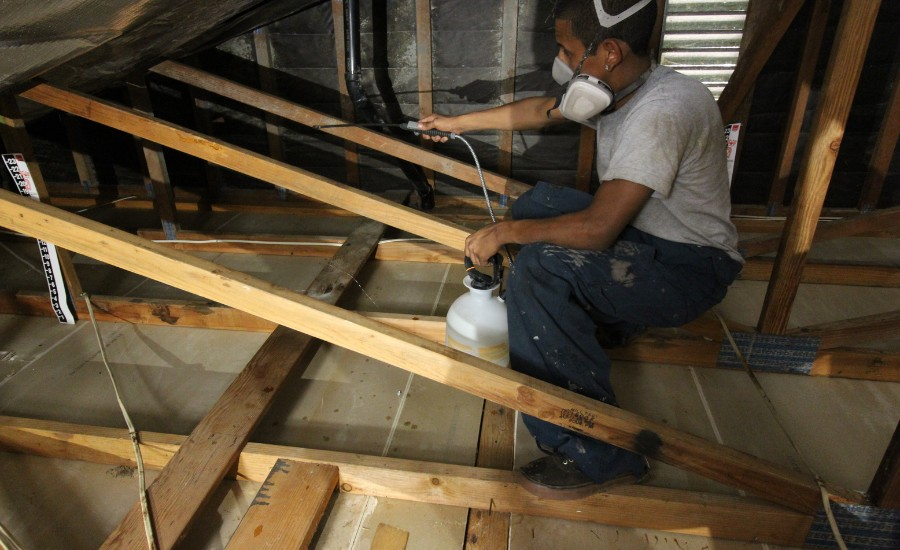
Following the removal of the pests, the affected areas require careful cleaning and decontamination. Droppings and contaminated nesting materials must be removed using specialized equipment to prevent hazardous dust from spreading into the living areas.
The Connection Between Rodent Activity and Insulation
Attics are among the most common places for rodents to settle in a residential property. They provide a dark, quiet, and climate-controlled environment that keeps pests safe from outdoor predators.
Once inside, rodents frequently use attic insulation as their primary nesting material. They burrow into fiberglass, blown-in, or cellulose insulation, tearing it apart and compressing it in the process.
As rodents nest, they saturate the surrounding insulation with urine and droppings. This contamination ruins the building material and creates strong, persistent odors that can permeate the living spaces below.
Additionally, compressed or torn insulation loses its thermal resistance, commonly known as its R-value. This loss of efficiency forces the home’s heating and cooling systems to work much harder to maintain a comfortable temperature.
The result is increased energy bills and premature wear and tear on the HVAC system. When damage reaches this level, removing and replacing the affected materials is the only practical solution.
Homeowners dealing with severe contamination often need to consider options for evaluating their house insulation in Fountain Hills to restore their property’s energy efficiency. Proper removal requires commercial-grade vacuums and protective gear to ensure the space is fully sanitized before new materials are introduced.
Preventive Measures for Long-Term Protection
While professional intervention is often necessary for active infestations, homeowners can take specific daily actions to prevent rodents from returning. Prevention focuses primarily on eliminating the three things rodents seek: food, water, and shelter.
Inside the home, property owners should store dry goods, pet food, and birdseed in heavy-duty plastic, glass, or metal containers with tight-fitting lids. It is important to avoid leaving dirty dishes in the sink overnight and to empty the kitchen trash regularly.
Homeowners should also repair any leaking faucets, pipes, or appliances, as rodents need a reliable water source to survive indoors.
Outside the home, yard maintenance plays a critical role in pest deterrence. Property owners should keep tree branches and shrubs trimmed at least 3 feet away from exterior walls and the roofline to remove natural bridges.
Firewood should be stored at least a foot off the ground and positioned well away from the foundation. For those looking to maintain a secure perimeter, scheduling regular inspections and using targeted rodent control in Fountain Hills helps identify minor exterior vulnerabilities early.
Fixing these small gaps and cracks before they invite a new infestation saves significant time and money.
Protecting Property for the Future
Dealing with rodents requires a methodical approach rather than temporary or incomplete fixes. By understanding the health risks and identifying common entry points, homeowners can actively protect their properties from associated damage.
Maintaining a secure exterior and promptly addressing internal vulnerabilities ensures the home remains safe, clean, and energy-efficient year-round.
When infestations do occur, relying on experienced professionals helps to mitigate damage and restore sanitary conditions efficiently. Attic Construction is an insulation contractor in Fountain Hills, AZ, specializing in attic insulation and rodent control for homeowners.
Taking proactive, objective steps today prevents costly repairs and provides long-lasting structural protection.