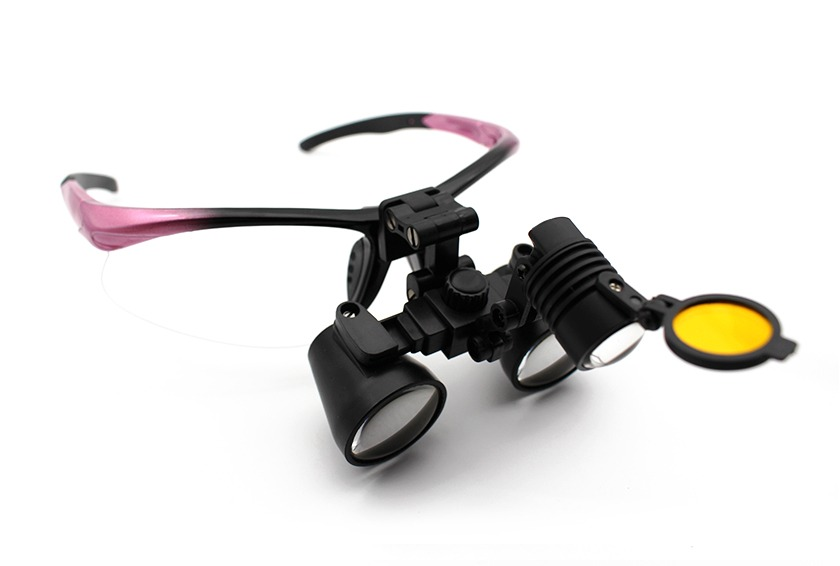
Benefits of Using Dental Loupes with Integrated Lighting
Clear vision is the foundation of precise dental care. Even minor visual limitations can affect preparation margins, soft tissue management, or the early detection of pathology. That is why many clinicians are turning to dental loupes with light rather than relying solely on overhead operatory illumination. Integrated lighting improves visibility exactly where it is needed, without shadowing or inconsistent brightness.
Modern magnification systems have evolved well beyond basic optics. When magnification and illumination are combined into a single, balanced system, the result is greater clinical accuracy, improved posture, and a more predictable workflow.
Why Dental Loupes With Light Improve Clinical Precision
The primary advantage of dental loupes with light is simple: consistent, shadow-free illumination that follows your line of sight. Traditional overhead lights create indirect illumination. When your hands, instruments, or the patient’s anatomy block the beam, shadows form. This forces you to reposition frequently or lean closer to compensate. In contrast, a mounted headlight directs light precisely where your eyes are focused. The beam moves with you, maintaining clarity regardless of hand position.
1. Improved margin detection
High-quality magnification paired with coaxial lighting allows you to clearly distinguish preparation margins, caries, and restorative interfaces. Subtle discrepancies become easier to identify, reducing the risk of over-preparation or missed decay.
2. Enhanced endodontic visibility
Access cavity refinement, canal location, and fracture line detection all depend on clear visualization. A focused dental loupes light improves depth perception and reduces guesswork in complex anatomy.
3. Better soft tissue evaluation
Early signs of inflammation, microtears, or tissue blanching are easier to detect when lighting is consistent and color rendering is accurate.
The difference is not cosmetic. It directly affects treatment outcomes.
Reduced Eye Strain and Mental Fatigue
Dentistry demands sustained focus at close working distances. When lighting is insufficient, the eyes work harder to compensate. Pupils dilate to gather more light. The brain strains to interpret unclear details. Over time, this contributes to fatigue, headaches, and reduced concentration.
Integrated lighting reduces this strain in several ways:
- Bright, even illumination decreases squinting
- Shadow elimination reduces visual confusion
- Consistent light intensity prevents constant pupil adjustment
Many clinicians notice they feel less mentally drained at the end of the day after switching to dental loupes with light. The improvement may seem subtle at first, but over months and years, it becomes significant.
Eye health is often overlooked in dentistry. Yet it plays a central role in long-term career sustainability.
Posture and Ergonomic Benefits
Poor posture remains one of the leading causes of musculoskeletal disorders among dental professionals. Leaning forward to see clearly places strain on the cervical spine, shoulders, and lower back.
Magnification alone supports better posture by encouraging an upright working position. When combined with integrated lighting, that benefit is amplified. You no longer need to tilt your head to catch overhead light or lean closer for clarity.
Ergonomic systems, particularly well-balanced flip-up designs, allow clinicians to maintain a neutral spine while keeping the field clearly illuminated. Over time, this reduces the risk of chronic neck pain and tension headaches.
Comfort also depends on proper fit. Frame balance, working distance, declination angle, and nose bridge support all play a role.
When magnification and lighting are aligned with ergonomic principles, the result is not only better dentistry but also a longer, healthier career.
Workflow Efficiency and Time Savings
Integrated lighting reduces micro-adjustments throughout a procedure. Without a headlight, clinicians often pause to reposition the overhead lamp, shift their chair, or ask an assistant to adjust lighting angles.
Each interruption may seem minor, but over the course of a full schedule, they add up.
A dental loupes’ light eliminates much of this inefficiency:
- The beam is always aligned with your visual axis
- Adjustments are minimal once properly positioned
- Assistants spend less time managing operatory lighting
This leads to smoother appointments and fewer workflow disruptions. In multi-surface restorative cases or surgical procedures, that consistency becomes especially valuable.
Efficiency is not about rushing. It is about removing unnecessary friction from the clinical process.
Superior Depth Perception and Detail Recognition
Magnification enhances visual detail, but lighting quality determines how well those details are interpreted. Integrated LED systems are designed to produce bright, focused, white light with minimal heat output.
Proper color temperature and intensity matter. Light that is too warm can distort shade perception. Light that is too cool may create glare. High-quality systems strike a balance, improving visibility without overwhelming reflective surfaces.
When illumination is coaxial, meaning aligned directly with the optical path, shadowing decreases, and depth cues improve. This helps with:
- Identifying microfractures
- Evaluating crown margins
- Detecting calculus deposits
- Assessing tissue texture
These refinements support more accurate diagnoses and cleaner, more predictable clinical outcomes.
Battery Technology and Practical Considerations
Earlier headlight systems were bulky and restrictive. Modern designs are lighter, more compact, and offer extended battery life.
Key features to evaluate include:
- Weight distribution between the frame and the battery pack
- Adjustable intensity settings
- Recharge time and run time
- Heat management
A well-designed system integrates seamlessly with flip-up loupes, maintaining balance and minimizing forward pull on the nose bridge. The best ergonomic loupes prioritize weight control and stability so that lighting enhances performance rather than adding strain.
When properly selected, dental loupes with light feel like a natural extension of your clinical vision rather than an attachment.
Long-Term Value and Professional Confidence
Investment decisions in dentistry should be evaluated over years, not months. High-quality magnification and integrated lighting support clinical precision every single day.
Over time, the benefits compound:
- Reduced physical discomfort
- Greater diagnostic confidence
- More refined restorative outcomes
- Improved patient communication
When you can clearly show a patient a crack line or marginal defect through magnified images or chairside explanation, trust increases. Visual clarity translates into clearer explanations and stronger case acceptance.
Confidence also affects performance. Clinicians who see clearly tend to work more deliberately and with greater assurance.
Supporting Ergonomic Dentistry
The future of dentistry increasingly emphasizes longevity and practitioner wellness. Musculoskeletal disorders remain common across the profession, particularly among clinicians who began practicing before ergonomic awareness became widespread.
Adopting dental loupes with light aligns with a broader shift toward preventive self-care within the profession. It reflects a proactive approach to protecting vision, posture, and energy levels.
Ergonomic loupes are not a luxury accessory. They are a clinical tool designed to reduce risk and improve precision simultaneously.
Final Thoughts
The integration of magnification and illumination represents a practical evolution in dental equipment. Dental loupes light systems provide shadow-free clarity, reduce eye strain, support ergonomic posture, and enhance workflow efficiency. These benefits extend beyond convenience. They influence diagnostic accuracy, restorative quality, and long-term physical health.
For clinicians committed to precision and sustainability in their careers, investing in well-designed dental loupes with light is a measured and informed decision. Over years of daily use, the impact becomes clear in both clinical outcomes and personal well-being.