Sofa vs Sectional Sofa: Which One Is Right for Your Home
Choosing the right seating furniture is one of the most important decisions when designing a living room. Sofas often become the visual and functional centerpiece of the space. They influence comfort, daily activities, and how people interact in the room. Many homeowners find themselves deciding between a traditional sofa and a sectional sofa. While both provide comfortable seating, they serve different needs depending on room size, layout, and lifestyle.
A traditional sofa usually focuses on simplicity, flexibility, and design variety. A sectional sofa, on the other hand, provides extended seating and a more structured layout that can define larger living spaces. Understanding the differences between these two options helps homeowners choose seating that fits both their space and how they actually use their living room.
What Is a Traditional Sofa
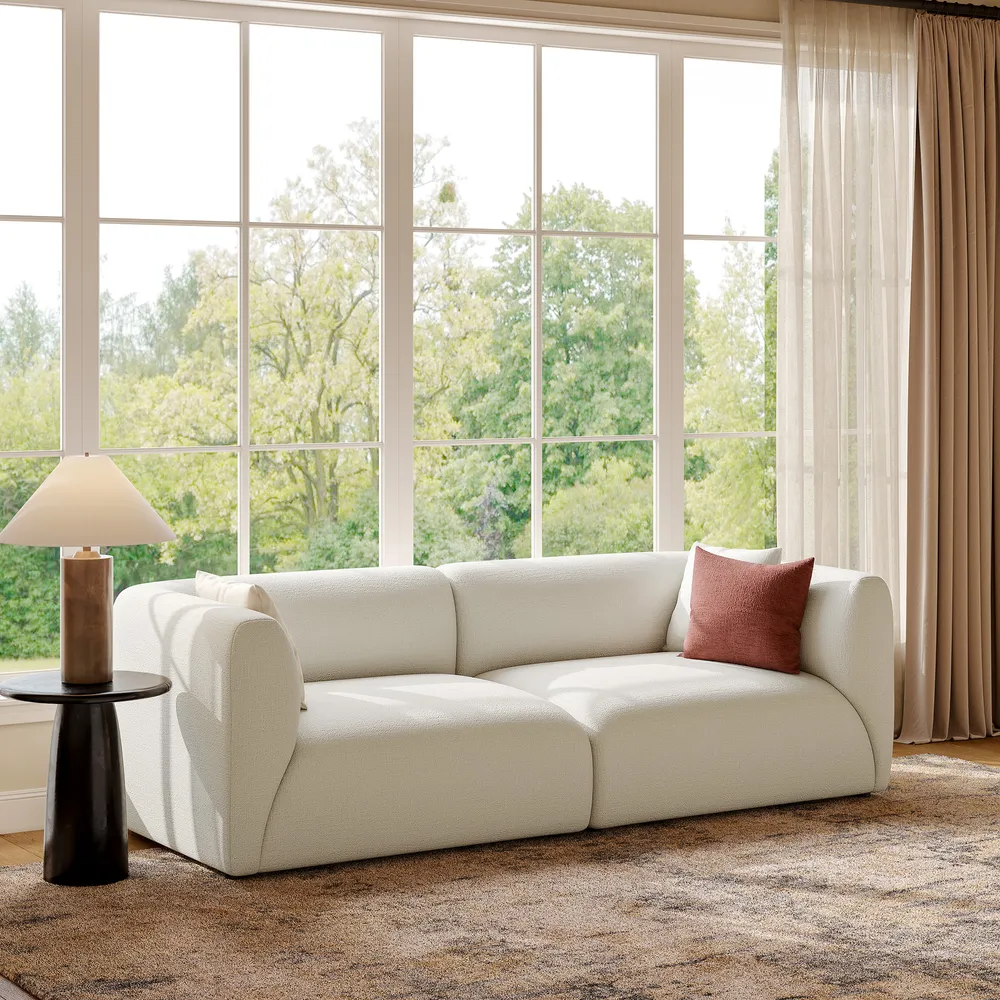
A traditional sofa is a standalone seating piece designed primarily for everyday comfort. It typically seats two to four people and is commonly placed in living rooms, lounges, and family spaces. Many homeowners begin by exploring different living room sofas to compare styles, materials, and seating sizes that match their interior layout.
Unlike sectional seating, a sofa is a single unit that can easily be repositioned or paired with additional furniture such as armchairs, ottomans, or loveseats.
Key Characteristics
- Usually seats 2–4 people
- Available in many styles, materials, and upholstery options
- Flexible placement within a room layout
- Often paired with accent chairs or coffee tables
Most modern sofas range between 80 and 90 inches wide, which comfortably accommodates three people without overwhelming the room.
High-quality sofas often include structural elements such as:
- Solid wood or reinforced plywood frames
- Sinuous spring suspension for consistent support
- High-resilience foam cushions wrapped in fiber for comfort
These construction features help maintain durability and long-term seating comfort.
What Is a Sectional Sofa
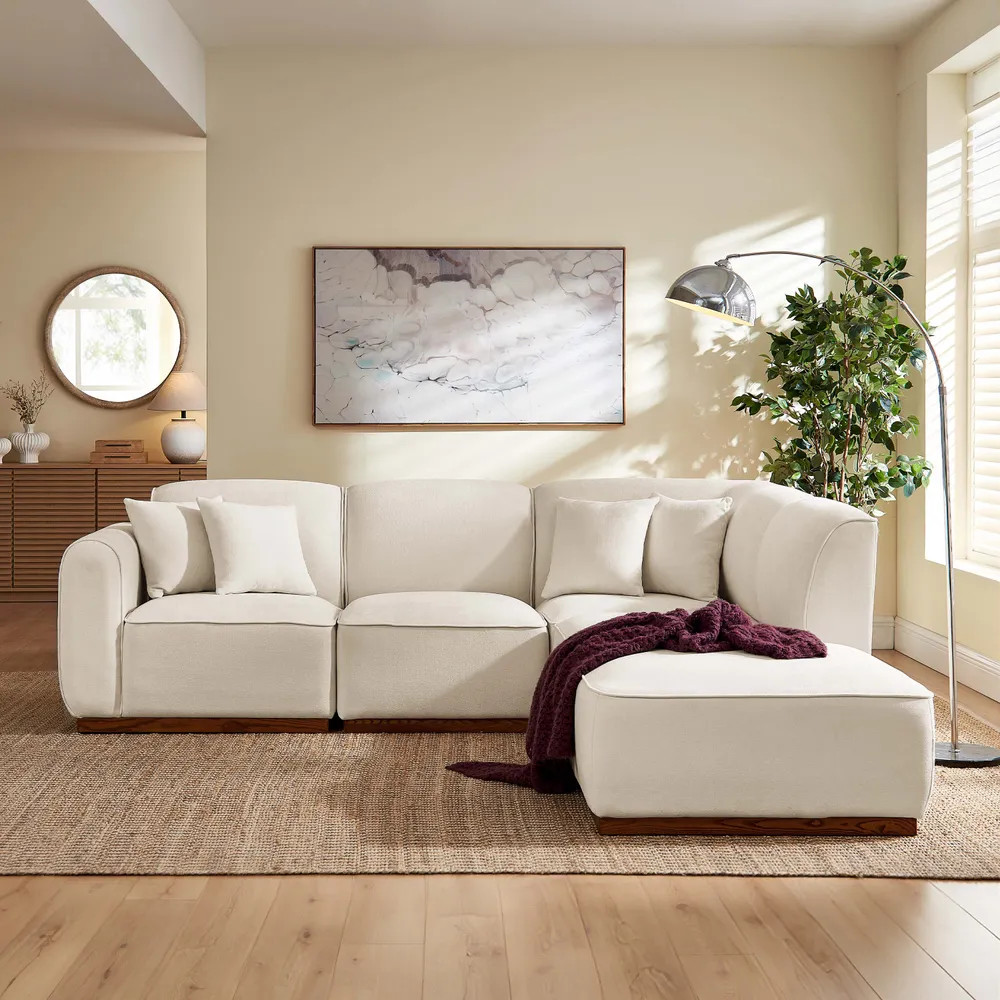
A modular sectional sofa is a seating system made up of multiple pieces designed to create larger seating arrangements. Unlike a single-frame sofa, it consists of several connected modules that can be arranged into L-shaped, U-shaped, or curved seating layouts.
Because it provides more seating capacity, this type of sofa is very popular in modern homes, especially in houses with larger living rooms or open-plan spaces.
Key Characteristics
- Modular or multi-piece structure
- Designed for 4–7 people or more
- Often includes chaise lounges or corner units
- Creates defined seating zones in large rooms
Common sectional configurations include:
- L-shaped sectionals for corner layouts
- Chaise sectionals that extend lounging space
- Modular sectionals that allow rearranging individual pieces
- Curved sectionals designed for open conversation areas
Because of their scale, sectional sofas are frequently used as the main seating hub in family living rooms.
Sofa vs Sectional Sofa: Key Differences
Although sofas and sectionals serve similar purposes, their differences become clear when considering layout, seating capacity, and flexibility.
Seating Capacity
A traditional sofa typically seats three people comfortably.
Sectional sofas significantly increase seating capacity. Depending on configuration, they can accommodate five or more people, making them ideal for larger households or frequent gatherings.
Room Layout Impact
Sofas are more flexible because they occupy a smaller footprint and can be moved easily.
Sectionals are larger and often anchor the entire room layout. Once positioned, they usually define the main seating area.
Space Efficiency
In smaller living rooms, a sofa paired with chairs can provide more flexible seating.
In larger rooms, sectionals can reduce the need for multiple furniture pieces by consolidating seating into one structure.
Social Interaction
Sectional sofas naturally create a shared seating area where people face each other more easily. This arrangement encourages conversation and group interaction.
Traditional sofas often require additional chairs or seating pieces to create the same social layout.
When a Traditional Sofa Is the Better Choice
A traditional sofa is often the best option when flexibility and simplicity are priorities.
It works especially well in the following situations.
Smaller Living Rooms
Compact spaces benefit from the lighter visual footprint of a single sofa. It leaves more room for movement and additional furniture.
Flexible Layouts
If you frequently rearrange furniture or redecorate, sofas provide greater flexibility than sectionals.
Mixed Seating Arrangements
Many designers prefer combining a sofa with:
- Accent chairs
- Ottomans
- Coffee tables
This layered layout can create a more dynamic living room design.
When a Sectional Sofa Makes More Sense
Sectional sofas are often chosen for comfort, space efficiency in large rooms, and group seating.
They are particularly useful in these scenarios.
Large Living Rooms
In spacious homes, a single sofa can feel visually small or disconnected. Sectionals fill the room better and create a clear seating zone.
Family Gatherings
For households where multiple people often watch movies, relax together, or host guests, sectionals provide more seating without needing extra chairs.
Open-Concept Spaces
Modern homes frequently combine the living room, dining room, and kitchen into one open area. Sectionals help define the living room area within this larger layout.
Everyday Living Scenarios
Choosing between a sofa and a sectional also depends on how the space is used daily.
Relaxation and Lounging
Both furniture types support casual relaxation, but sectionals often include chaise sections that allow people to stretch out more comfortably.
Watching Movies
Families who regularly watch movies together often prefer sectionals because they provide larger seating surfaces and allow several people to sit close together.
Hosting Guests
If guests visit frequently, sectionals provide enough seating for group conversations without needing additional chairs.
Flexible Living Rooms
For living rooms used for multiple purposes, such as reading, entertaining, or children’s playtime, sofas provide more adaptable layouts.
How to Choose the Right Option
Selecting between a sofa and a sectional requires considering several practical factors.
Room Size
Measure the available space carefully before choosing seating furniture.
As a general guideline:
- Living rooms under 200 square feet often work better with traditional sofas.
- Larger living rooms can accommodate sectional layouts comfortably.
Traffic Flow
Furniture should allow easy movement around the room. Sectionals can sometimes block pathways if placed incorrectly.
Seating Needs
Consider how many people typically use the space at the same time. Larger households may benefit from sectional seating capacity.
Interior Design Style
Traditional sofas are often easier to match with a wide range of interior styles.
Sectionals tend to work best in contemporary, minimalist, or open-plan homes.
Conclusion
Both sofas and sectional sofas offer unique advantages depending on your living space and lifestyle. Traditional sofas provide flexibility, design variety, and easy integration into different room layouts. They work well in smaller spaces or in living rooms that combine multiple seating pieces.
Sectional sofas offer larger seating capacity and can define the structure of a living room, especially in open or spacious homes. By considering room size, seating needs, and how the space is used every day, homeowners can choose furniture that creates a comfortable and functional living environment.
Disclaimer
The information provided in this article, “Sofa vs Sectional Sofa: Which One Is Right for Your Home,” is intended for general informational and educational purposes only. While every effort has been made to ensure the accuracy and reliability of the content, furniture specifications, design recommendations, and space guidelines may vary depending on individual preferences, room dimensions, manufacturer designs, and product availability.
This article does not constitute professional interior design, architectural, or purchasing advice. Readers are encouraged to measure their spaces carefully, review product specifications, and consult with furniture retailers or interior design professionals before making purchasing decisions.